
The core of a landlord policy
- Property: the building at replacement cost against fire, wind, water and other covered damage.
- Loss of rents (business income): replaces rent you can't collect while the building is being repaired after a covered loss.
- General liability: claims from tenants, guests and passers-by for injury or property damage. See property vs. general liability.
- Umbrella: more liability limit above the primary policy.
- Equipment breakdown for boilers and building systems, and ordinance or law coverage for the extra cost of rebuilding to current code.
Walk-ups vs. elevator buildings
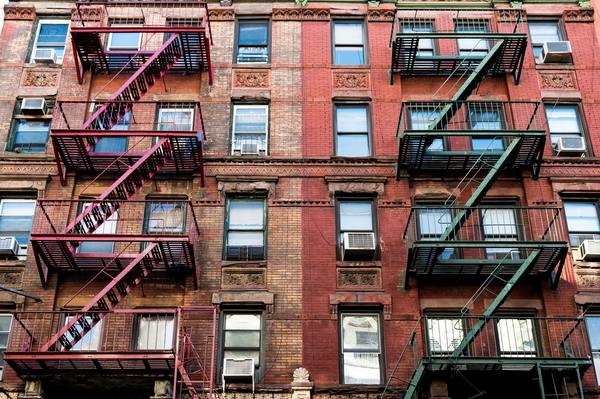
Walk-ups are usually older, smaller and built with wood joists inside brick walls. Underwriters focus on the age of the wiring, plumbing, roof and heating. Elevator buildings add elevators and larger mechanical systems, and often a bigger staff. Both are insurable. The details just steer which insurers are the best fit.
What tenants insure themselves
Your policy does not cover tenants' belongings or their personal liability. Many landlords ask tenants to carry renters insurance. Commercial tenants in a mixed-use building should name you as additional insured on their policy. See mixed-use.
Frequently asked questions
What is the difference between landlord insurance and homeowners insurance?
Homeowners insurance is for a home you live in. A building you rent out needs a landlord or commercial policy that covers the building, lost rents and your liability as an owner. Apartment buildings are normally insured on commercial forms.
Does landlord insurance cover lost rent?
Usually yes, if the policy includes loss of rents (business income) and the loss is from a covered cause like a fire. It does not cover tenants who simply stop paying.
How much is landlord insurance in NYC?
It depends on the building's size, construction, age, condition, loss history and the limits you choose. For buildings with 4 to 1000 apartments, the instant estimate shows a range in about a minute. See what drives premiums.